
About Hearing Loss

As Australians live longer and remain active well into later life, research is revealing a powerful connection between hearing health and cognitive wellbeing. One of the most important discoveries in modern medicine is that untreated hearing loss is the largest modifiable risk factor for dementia.

The encouraging news is that treating hearing loss—most often with hearing aids—can slow cognitive decline and support better long-term brain health. This is no longer theory; it is now supported by landmark clinical trials.

“Research shows treating hearing loss may reduce cognitive decline by up to 48%.”

– The ACHIEVE (Aging and Cognitive Health Evaluation in Elders) Study Published in the Lancet

Causes of hearing loss

Causes in the outer ear

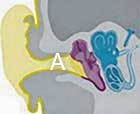
Common causes include buildup of earwax, foreign objects in the ear canal, inflammation or infection of the ear canal and structural abnormalities or malformations of the outer ear/ear canal. These issues block or interfere with sound waves entering the ear canal, resulting in conductive hearing loss. Most outer ear problems can be effectively addressed with simple treatments like earwax removal, medications for infections, or minor procedures. If unresolved, the hearing loss can usually be compensated with a hearing aid.
Causes in the middle ear

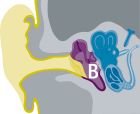
Inflammation, fluid behind the eardrum, perforations of the eardrum and Otosclerosis (a stiffening of the bones in the middle ear) are the most common problems to interfere with middle ear function. Most middle ear problems can be addressed effectively with medication or surgery. If this is not possible, the hearing loss can be compensated with a hearing aid.
Causes in the inner ear

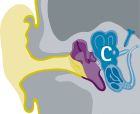
The majority of hearing issues concern the inner ear (C). The most common cause is the natural aging process. However, loud noise, certain medication, disease or trauma to the head can have an influence on a person’s hearing ability. These influences damage the fine hair cells and affect the transmission of signals to the auditory nerves. Usually, inner ear hearing loss cannot be addressed medically. However, this type of hearing loss can be corrected with a hearing aid in most cases.
Mixed ear causes

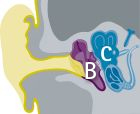
Mixed hearing loss occurs when both conductive (outer ear A and/or middle ear B) and sensorineural (inner ear C) problems are present in the same ear. Common causes include age-related or noise-induced inner ear damage (C) combined with outer/middle ear issues such as earwax buildup, infections, fluid, eardrum perforations, or otosclerosis (A/B). Other factors can include head trauma, infections, or certain medications.

What are the different degrees of hearing loss?

Hearing loss exists on a spectrum, ranging from mild through to moderate, severe, and profound levels. Each degree reflects how much sound is reduced and, more importantly, how it affects an individual’s ability to communicate and engage in everyday situations.

In the early stages, hearing loss is often subtle. Individuals may find themselves turning the television up louder than others prefer, asking people to repeat themselves, or struggling to follow conversations—particularly in the presence of background noise. As hearing loss progresses, these challenges can become more noticeable and frequent.

It is important to recognise that hearing and understanding are not the same. Many people with hearing loss can still detect sound, but speech may lack clarity. Conversations can seem muffled or incomplete, especially in social settings or group discussions.

This is often because hearing loss commonly affects the higher frequencies first. These higher-pitched sounds carry much of the detail in speech—such as consonants—which are essential for distinguishing words. While lower-frequency sounds (like vowel sounds) may still be heard, the loss of high-frequency detail can make speech difficult to interpret, even when it is loud enough.

As the degree of hearing loss increases, both the audibility and clarity of sound are affected, making everyday communication more effortful. Understanding where an individual’s hearing sits on this spectrum is the first step toward identifying appropriate support and solutions.

How Your Ear Works

Tinnitus

Tinnitus is the noises or ringing in the ears when there is no other external sound or noise. Usually the sound is described as a ringing, although some hear a clicking, hissing, electric buzzing, humming or roaring noise, and the sound may appear to be coming from one ear or both. It can also be intermittent or continuous.

Causes

Most people with tinnitus have some degree of hearing loss. Hearing loss may have many different causes, but one of the major sources is cochlear damage. Tinnitus is not a disease, but rather a symptom that can result from a number of underlying issues. It is a common symptom, which affects 10-15% of people. The most common cause is noise-induced hearing loss, but other causes can include ear infections, tumour, exposure to certain medicine, a previous head injury and earwax. Stress and fatigue can make the symptoms of tinnitus worse. Exposure to noise can lead to hearing loss, and therefore increase the chance of suffering from tinnitus. Those working in a noisy environment, such as industrial workers, are considered high risk due to their long-term exposure to high noise levels. Sudden noises can also lead to tinnitus, such as concerts, listening to music that is too loud either in cars or through headphones.

Prevention

Prolonged exposure to sudden or long-term noise can result in damage to hearing, which can then lead to tinnitus. The best prevention for tinnitus is avoiding loud noise, reducing the noise source or protecting your ears through ear plugs.

Treatment

Where tinnitus is present, hearing aids may help some sufferers mask the noise and lower the intensity of their symptoms. Properly fitted hearing aids can significantly reduce the tinnitus from hearing loss as they can distract the person through amplification of environmental sounds. Some modern hearing aid developments specifically include tinnitus masking functionality to aid in the accurate treatment of tinnitus. If suffering from tinnitus, it is best to find the appropriate hearing protection or hearing aid to reduce your symptoms. Ears to You can provide you with the best independent advice available. Ears to You – We Come to You

Want To Speak To A Hearing Aid Specialist?

If you are concerned about your hearing or unsure of which hearing aid would suit you best, speak to one of our expert clinicians. We are dedicated to providing you with the best hearing care solutions.